


San Diego Beach Weather by Month (Marine Layer, Wind, Water & Crowds)


Disclosure: This section features several affiliate links, meaning we earn a small commission if you purchase through these links. However, not all links posted are affiliate links. Click here to learn more.
Before we dive in, don’t miss future guides like this; subscribe to San Diego Beach Review for insider tips on everything to do in, on, and near the water.
January – February (Cool, Clear, and Whale Season)
Winter on the coast is cooler but often clearer than people expect.
You’ll typically experience:
Crisp air
Less marine layer
Stronger swells and tides
Fewer crowds
Cooler water temperatures
This is one of the best times for wildlife viewing, and many visitors pair beach walks with a seasonal whale watching cruise during peak migration months for gray whales.
Winter also brings extreme low tides and king tides, making it an ideal time to explore marine life on a guided La Jolla tide pool tour when tidal conditions are safest and most accessible.

March – May (Spring Conditions & Increasing Marine Layer)
Spring is one of the most unpredictable seasons on the San Diego coast.
You may get:
Sunny warm days
Windy afternoons
Increasing morning cloud cover
Mild crowds
Ocean conditions remain chilly in spring, so checking the monthly ocean temperature breakdown before swimming helps set realistic expectations, especially for visitors used to warmer Atlantic water.
Spring is also a strong season for coastal kayaking, and many travelers book a La Jolla sea caves kayak tour during calmer morning conditions when visibility and wildlife activity are often better.
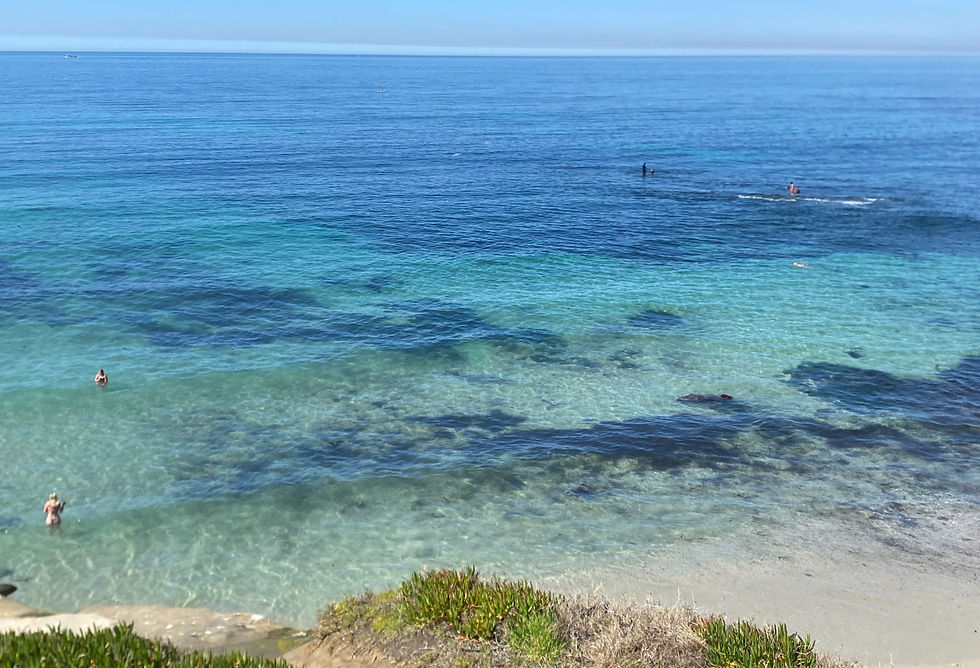
May Gray & June Gloom (Peak Marine Layer Season)
This is the period that surprises tourists the most.
During May and June:
The sun may not come out until afternoon (if at all)
Beaches can stay overcast all day
Morning fog is extremely common
Even sunny forecasts can feel cloudy at the coast
Seasonal mood dips are even commonly mentioned by locals due to prolonged gray mornings.
However, the marine layer often burns off earlier in summer mornings compared to late spring, especially around 9–11am.
Despite cloud cover, UV rays remain strong, so sunscreen is still essential even on cloudy beach days, one of the most common mistakes first-time visitors make.
Despite the days not always being sunny, May is still a great time for activities like paddleboarding, where you can enjoy the water without having to get in it!

July – August (Warmest Water, Biggest Crowds, Earlier Sun)
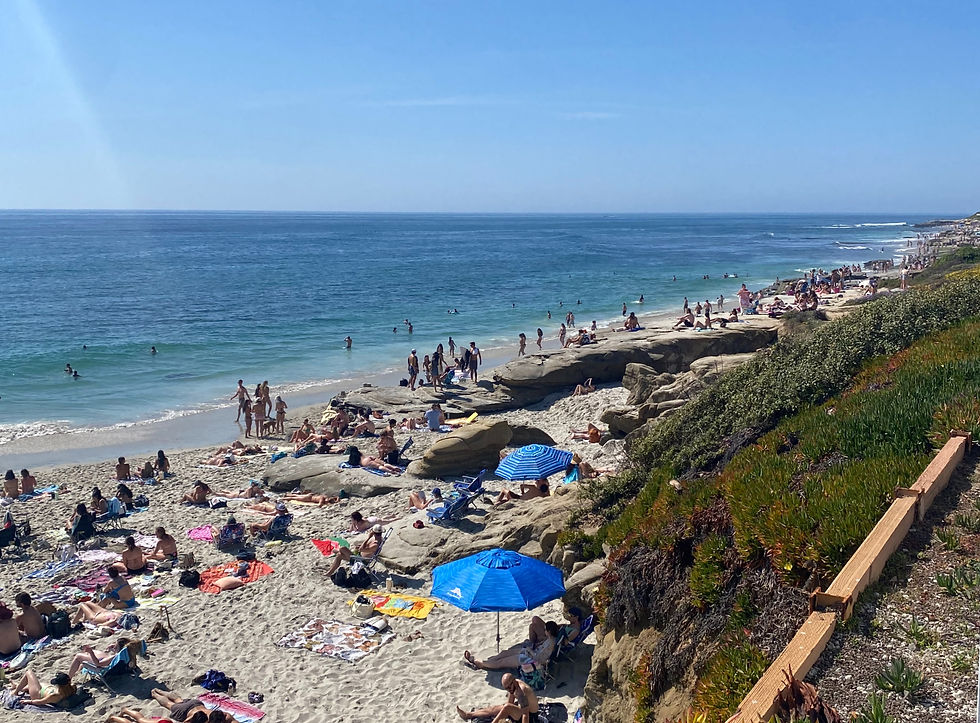
Summer is peak beach season in San Diego.
Expect:
Warmer ocean temperatures
Earlier marine layer burn-off
Large crowds (especially 1–3pm)
Full parking lots by late morning
Strong afternoon winds
July and August are the busiest months on San Diego beaches. Fourth of July is consistently the most crowded beach day of the year, with people setting up beach gear as early as 6–7am.
Summer is also the best season for water activities, and calmer conditions make experiences like a La Jolla snorkel tour or beginner surf lesson far more enjoyable for first-time ocean swimmers.
Parking at major beaches fills well before 1pm during summer weekends. Crowds typically peak between 1–3pm and then slowly thin toward sunset.
If you want a quieter experience:
Arrive before 9–10am
Leave around 1pm as crowds peak
Walk further from main access points for more space
September – October (Hidden Local Favorite Season)
Early fall is widely considered the best beach weather of the year.
You’ll typically see:
Less marine layer
Warmer water lingering from summer
Smaller crowds
Clearer sunsets
Increasing wind shifts late in the day
September often delivers the most consistent sunny beach days with fewer tourists, making it ideal for paddleboarding, beach yoga classes, or long coastal walks like those featured in this guide to exploring San Diego’s coastal beauty on foot.

November – December (Windier, Bigger Waves, Lower Crowds)
Late fall and early winter bring stronger Pacific swells and noticeable wind increases.
You may notice:
Larger waves
Stronger lateral currents
Sand berms and dunes built along beaches
Occasional coastal flooding during high tides
Very low tourist crowds
Winter brings dramatic tidal shifts. King tides can cause beach erosion and occasional flooding in low-lying areas like Mission Beach and La Jolla Shores.
Some beaches partially disappear during high tide combined with strong swell.
You’ll also notice large sand dunes built along beaches like Pacific Beach (near Law Street), Del Mar, and parts of Mission Bay. These dunes help combat erosion and protect buildings and lifeguard equipment from higher tides and winter storms.
This season is better suited for scenic beach walks, harbor cruises, and wildlife viewing like whale watching rather than extended swimming due to cooler water and wind exposure.

Wind Patterns Along the Coast
San Diego beaches are almost always windier than areas just a block inland. The ocean breeze amplifies coastal wind, which makes beaches feel colder than the forecast suggests.
Summer Wind Patterns
Mornings are often calm
Wind increases in the afternoon
Evenings can feel chilly once the sun drops
Mornings in summer can actually feel warmer than evenings because the wind hasn’t picked up yet and the sun is strengthening.
Fall & Winter Wind Patterns
Noticeable wind increases beginning in September and October
Stronger offshore and coastal gusts
Larger swell from the Pacific
Colder air mixing with ocean breeze
By sunset, temperatures can drop dramatically. Always bring at least a light jacket or long sleeve, even on warm days. Once the sun disappears, coastal temperatures feel significantly colder.
For a full breakdown of what to bring, reference our packing list guide before your trip.

How Weather Impacts Beach Crowds in San Diego
Crowds follow very predictable patterns:
Light crowds: mornings before 11am
Peak crowds: 1pm–3pm
Declining crowds: late afternoon
Summer weekends: extremely crowded all day, parking extremely limited
Weekdays: more manageable year-round
Walking further away from main beach access points almost always leads to significantly more space and quieter surroundings, in addition to arriving in the morning.
For more on beach crowds, check out our beach reviews, which dive into the specifics of crowd levels at San Diego's most popular beaches.

Why Beaches Feel Colder Than Expected
Many visitors find San Diego beaches colder than anticipated because:
Ocean wind is stronger directly on the sand
Marine layer blocks warmth
Evening temperature drops are significant
The Pacific Ocean rarely feels “warm” compared to tropical destinations
Even on sunny days, wind chill combined with water temperature can make beach lounging feel brisk.
Best Time of Day to Go to the Beach (Based on Weather & Crowds)
For the most comfortable beach experience:
Arrive before 9–10am for easier parking and calmer wind
Expect peak crowds between 1–3pm
Plan to leave or layer up before sunset due to rapid temperature drops
Even in summer, the beach becomes significantly colder once the sun goes down, especially with the ocean breeze.
Important Coastal Safety Tip: Avoid the Ocean After Rain
One of the most important (and often ignored) beach safety rules in San Diego is avoiding ocean water for at least 72 hours after rainfall due to increased bacteria and runoff levels along the coast.
This applies to all beaches, especially near:
River outlets
Lagoons
Bays
Urban runoff zones
Always check water quality after rain, to make sure it's advisable and safe to swim. You can check water quality here.
View our guide on San Diego beach water quality for more information.

FAQ: San Diego Beach Weather, Marine Layer & Coastal Conditions
Why are San Diego beaches cloudy in the morning?
This is caused by the marine layer, a coastal cloud system that forms overnight and typically burns off by late morning or afternoon, especially in summer.
Is the marine layer worse in May and June?
Yes. May Gray and June Gloom are the peak months for extended morning cloud cover along the San Diego coast.
Does the sun still burn through the marine layer?
Yes. UV rays remain strong even on cloudy days, which is why sunscreen is essential year-round at San Diego beaches.
What month has the best beach weather in San Diego?
September and early October typically offer the warmest water, clearest skies, and fewer crowds.
Is San Diego windier at the beach than inland?
Yes. Ocean-facing beaches experience significantly stronger wind, especially in the afternoon and during fall and winter months.
How cold is the ocean in San Diego throughout the year?
Water temperatures generally range from the high 50s to low 70s depending on the season, with the warmest conditions usually in late summer and early fall. Reviewing our month-by-month ocean temperature guide can help set realistic swimming expectations.
Does the marine layer come back at sunset?
Often, yes. Coastal clouds and fog can return in the evening and block sunset views even after a sunny afternoon.
Does the marine layer last all day?
Sometimes. In May and June, it may not burn off until after 1pm or may remain all day.
When is the sunniest time at San Diego beaches?
Late summer and early fall typically have the clearest, sunniest coastal days.
Is San Diego windy year-round?
There is almost always some ocean breeze, but wind is stronger in fall and winter.
What are king tides?
King tides are extremely high tides that occur in winter and can cause temporary flooding and beach erosion.
When are beaches most crowded?
July and August, especially between 1–3pm. Fourth of July is the busiest beach day annually.
When are San Diego beaches least crowded?
Early mornings, weekdays, and the months of September through early November typically have the lowest crowd
levels.
Is it still worth going to the beach during June Gloom?
Absolutely. The marine layer often clears by midday, and mornings are quieter, less windy, and easier for parking.
What should I bring due to coastal weather changes?
Layers, sunscreen, and wind-resistant clothing are essential since temperatures can drop quickly once the sun lowers or wind increases near the shoreline.

Final Thoughts: What Beachgoers Should Realistically Expect Year-Round
San Diego beach weather is beautiful, but not as predictably sunny as many travelers assume.
Marine layer mornings, afternoon winds, cooler ocean temperatures, and seasonal crowd shifts all play a major role in the coastal experience.
Planning around weather patterns, arriving early, checking ocean temperatures, and understanding seasonal marine layer trends will dramatically improve your beach trip — and help you experience the San Diego coast the way locals actually do.
Don’t miss out on the best beaches, activities, and local guides; subscribe here and get the latest San Diego tips.


Comments